
How House Painters Deliver Better Results
- Matthew Jackson

- Jun 16
- 6 min read
Fresh paint can make a room feel finished or make an exterior look cared for again, but the real difference is rarely the paint alone. Skilled house painters earn their value in the prep, the protection of surrounding surfaces, the discipline of clean lines, and the ability to deliver a finish that still looks right after daily wear and changing weather.
That matters because most painting problems do not start on the final coat. They start earlier, with skipped patching, poor sanding, loose caulk, dirty substrates, or rushed scheduling. A wall may look fine for a week and then show flashing, peeling, lap marks, or rough repairs once the light shifts. Good painting is not just visible in the color. It is visible in what never becomes a problem later.
What professional house painters actually do
Many property owners think of painting as a simple trade - cover the old color, clean up, and move on. In practice, professional house painters manage a sequence of technical decisions that affect adhesion, finish quality, and durability.
Inside the home, that often means evaluating drywall condition, identifying nail pops, repairing minor surface damage, sanding patched areas smooth, and priming where needed so the finish coat looks even from wall to wall. Trim and doors add another layer of detail because every brush mark, drip, or soft edge is easier to notice on tighter surfaces.
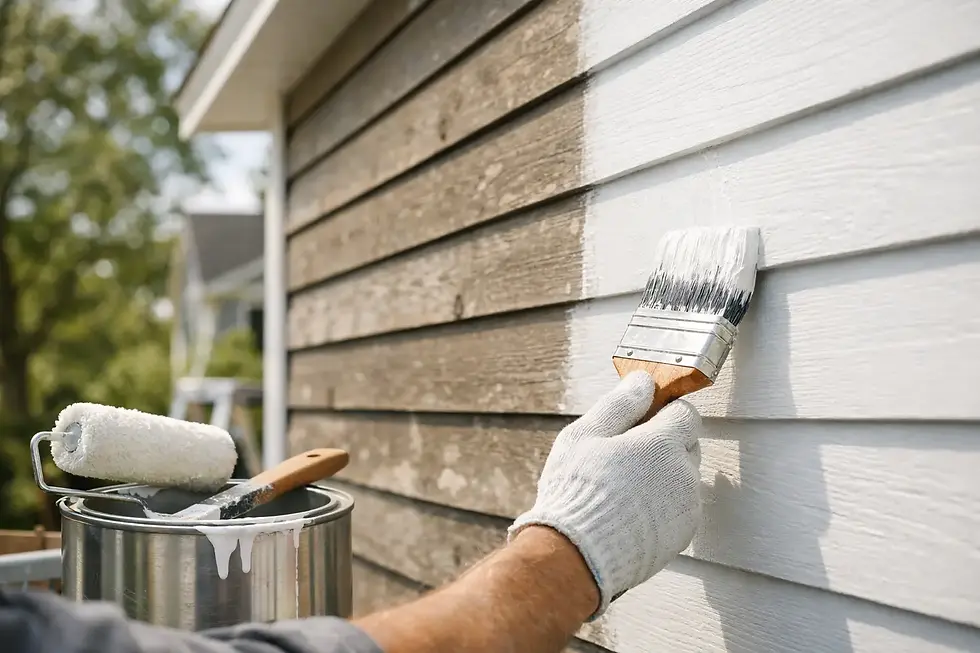
Outside, the demands increase. Sun exposure, moisture, temperature swings, and seasonal wear all affect how a coating performs. Exterior work requires careful surface preparation, attention to failed caulk lines, awareness of substrate movement, and product selection that matches the material being painted. A clean-looking result on day one is not enough if the coating system is not built for the conditions around it.
Why prep separates average from dependable house painters
If there is one place where quality shows up early, it is preparation. This is where dependable crews slow down enough to prevent the familiar issues homeowners and property managers want to avoid.
Surface prep is not glamorous, but it is where longevity starts. Walls need cleaning when residue or dust is present. Small dents and drywall damage need patching that disappears under paint rather than telegraphs through it. Glossy surfaces often need sanding for proper adhesion. Gaps around trim may need fresh caulk. Exterior surfaces may need scraping, spot priming, or selective repairs before any finish coat goes on.
There is also a judgment call involved. Not every surface needs the same level of intervention. Over-prepping can waste time and money, while under-prepping leads to callbacks and early failure. Experienced painters know where precision matters most and how to match the prep plan to the age, condition, and purpose of the space.
For occupied homes, prep also includes protection. Floors, furniture, fixtures, landscaping, and hard surfaces should be covered and respected from the start. Clean work is not an extra. It is part of professional execution.
Interior results depend on control, not speed
Interior painting looks simple until natural light exposes every inconsistency. Hallways, living rooms, kitchens, bedrooms, trim packages, and stairwells all reveal flaws differently depending on surface angle and sheen level.
That is why control matters more than speed. Sharp cut-ins at ceilings and corners give the room a finished appearance. Even rolling technique reduces stipple inconsistency and lap marks. Proper drying times help prevent scuffing or uneven sheen. On trim and doors, a refined finish depends on preparation, product handling, and patience.
Accent walls are a good example. They can add contrast and visual structure, but they only work when lines are exact and color transitions are clean. A feature wall with wavy edges or bleed-through does not look intentional. It looks unfinished.
There is also the practical side of working in someone else's home. Reliable interior painters plan around access, daily routines, and cleanup. Homeowners want updated spaces, but they also want the process handled with respect. That means showing up as scheduled, keeping the site orderly, and leaving rooms usable whenever possible.
Exterior painting has higher stakes
Exterior painting is partly about curb appeal, but it is also about protecting the structure. Paint and coatings help shield siding, trim, and other exposed elements from moisture intrusion and surface breakdown. In a place like Rhode Island, where seasonal weather can be hard on exteriors, that protective role matters as much as appearance.
This is one reason exterior jobs should not be treated like oversized interior projects. Surface conditions are less predictable, access can be more complicated, and timing becomes more important. Temperature, humidity, direct sun, and rain forecasts all affect application and curing.
Good exterior painters account for those variables instead of forcing the schedule. Sometimes that means adjusting the order of work, delaying a section, or choosing a product with performance characteristics suited to the substrate and conditions. Those decisions may not be obvious to the customer in the moment, but they often determine whether the finish holds up cleanly over time.
What to look for when hiring house painters
Hiring the right crew is less about finding the lowest number and more about identifying who takes the work seriously. Clear estimates matter because they show what is included, what surfaces are being addressed, and whether prep work has been considered. Vague pricing often leads to vague execution.
It also helps to listen for how painters describe the job. Professionals talk about repairs, masking, primers, finish expectations, and site protection. They do not talk as if every room or exterior is identical. If a contractor is only focused on how fast they can get paint on the wall, that is usually a warning sign.
Consistency matters too. Reliable scheduling, steady communication, and a tidy worksite are not separate from craftsmanship. They are signs of discipline. The same contractor who protects your floors carefully is often the one who notices small surface issues before they become visible defects.
Homeowners and managers should also pay attention to how painters define the finish. Are they aiming for coverage only, or for a refined result? There is a real difference between a space that has been repainted and one that looks professionally finished.
The trade-off between price and durability
Every project has a budget, and not every property needs the same scope. A rental turnover, a personal residence, and a storefront may each call for different priorities. That is normal. What matters is understanding the trade-offs clearly before work begins.
A lower price can be reasonable when the scope is simpler, the surfaces are already in strong condition, or the finish standard is more basic. Problems start when low pricing depends on skipping prep, reducing coverage, or rushing labor. Those cuts usually show up later as touch-up requests, premature wear, or surfaces that never quite look right.
Spending more does not automatically guarantee quality either. The value is in how the work is performed. A well-run painting project combines preparation, product knowledge, execution, and cleanup. That combination protects the investment better than a higher price alone.
For many clients, the best value sits in the middle - not the cheapest bid, not the most inflated one, but the estimate that reflects real prep, clear expectations, and workmanship designed to last.
Why detail work changes the whole impression
Most people notice color first, but they remember details. Clean trim lines, smooth repaired walls, properly coated doors, and crisp transitions around ceilings and casings make a space feel complete. On the exterior, straight lines and well-finished trim create a sharper, better-maintained impression even before anyone steps inside.
This is where craftsmanship-led painters stand apart. They understand that details are not minor. They are what make the larger project feel polished. A beautifully chosen wall color loses impact if the surrounding execution is sloppy. The reverse is also true - disciplined application can elevate even a simple, neutral palette.
That is why companies built around precision, prep, and respectful service tend to deliver stronger results over time. PrimeLayer Painting approaches projects with that standard in mind, focusing on the work behind the finish as much as the finish itself.
When you are comparing painters, look past the promise of fresh color and pay attention to the process. The right result comes from careful preparation, steady execution, and the kind of workmanship that still looks good after the equipment is packed up and real life resumes.


Comments