
Why Hire a Licensed Insured Painting Contractor
- Matthew Jackson

- Jun 11
- 6 min read
A low quote can look appealing right up until the first missed detail, the first unexplained delay, or the first accident on your property. That is where hiring a licensed insured painting contractor stops being a checkbox and starts being real protection. For homeowners and property managers in Rhode Island, it is one of the clearest ways to reduce risk while improving the odds of a clean, durable, well-managed paint job.
Painting seems simple from a distance. Walls get coated, trim gets refreshed, and the space looks better. But lasting results come from what happens before the first coat goes on - surface prep, drywall repair, sanding, caulking, masking, product selection, moisture awareness, and disciplined application. Licensing and insurance do not guarantee excellence on their own, but they are strong signs that you are dealing with a legitimate professional who treats the work seriously.
What a licensed insured painting contractor actually gives you
A licensed insured painting contractor offers more than labor. You are hiring accountability. Licensing helps confirm that the contractor is operating as a real business and meeting state or local requirements where applicable. Insurance helps protect you if property damage or an on-site injury occurs during the project.
That matters more than many people realize. If a worker falls from a ladder, if paint is spilled across flooring, or if exterior prep causes accidental damage, the financial question arrives quickly. Without proper coverage, that problem can shift toward the property owner. With a properly insured contractor, there is a clearer layer of protection in place.
There is also a professionalism factor. Contractors who maintain licensing and insurance are usually more structured in how they estimate, schedule, document, and communicate. They tend to have established processes because they are operating a business built to last, not just picking up occasional jobs.
Why it matters for interior painting
Interior painting is where homeowners notice everything. Crooked cut-ins, roller marks, splatter on floors, rough drywall patches, and paint bleeding onto trim all stand out once the room is back in use. A professional approach reduces those problems, but only if the contractor respects prep and protection from the start.
That is one reason credentials matter. A licensed insured painting contractor is more likely to approach interior work with the discipline it requires. Furniture should be protected, floors covered properly, damaged areas patched, sanding dust controlled, and edges cut cleanly. The paint itself is only part of the finish. The preparation is what makes the final result look refined instead of rushed.
There is a practical side as well. Interior projects happen inside lived-in spaces. Homeowners want minimal disruption, predictable timing, and a crew that leaves the home in good order each day. Professional contractors understand that respectful in-home service is part of the job, not an extra.
Why exterior work raises the stakes
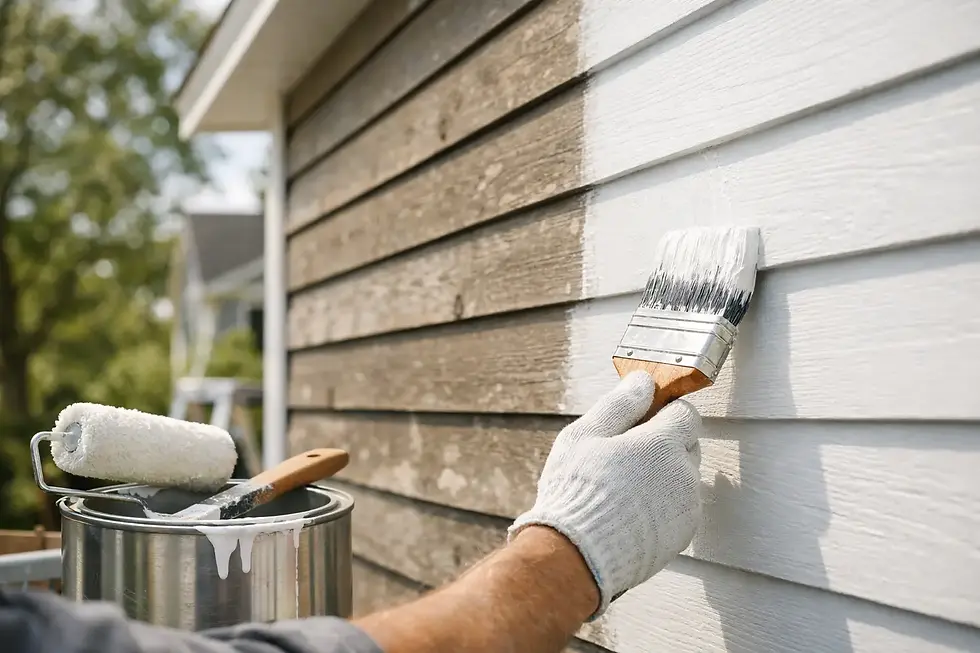
Exterior painting comes with more exposure in every sense. Weather, height, ladders, power washing, scraping, and surface failure all add complexity. Rhode Island conditions can be especially demanding, with seasonal moisture, temperature swings, and coastal wear putting finishes under pressure.
A licensed insured painting contractor is especially important here because exterior jobs carry more risk. There is more chance of injury, more chance of property damage, and more room for expensive shortcuts. If prep is skipped and failing paint is simply coated over, the finish may look acceptable for a short time but break down far earlier than expected.
Good exterior work is built in layers. Loose paint needs removal. Bare areas may need primer. Gaps need caulking. Damaged surfaces may need repair before any finish coat is applied. The contractor should also know when conditions are wrong for painting, because forcing the schedule in poor weather can shorten the life of the job.
Credentials are the baseline, not the full standard
This is where many customers make a reasonable but incomplete assumption. They hear "licensed and insured" and think the quality question has been answered. It has not. Those credentials matter, but they are the floor, not the ceiling.
A contractor can be legitimate on paper and still deliver inconsistent workmanship. That is why the next step is evaluating how they work. Do they talk clearly about prep? Do they explain what is included in the estimate? Are drywall patching, sanding, caulking, priming, and cleanup spelled out, or left vague? Do they describe how they protect floors, landscaping, fixtures, and furniture?
The best painting contractors are specific. They do not hide behind broad promises. They explain the process because they have one.
How to evaluate a licensed insured painting contractor
Start with proof, not assumptions. Ask whether the contractor is licensed and insured, then ask for documentation. A reputable company should be comfortable providing that. If the response gets vague or defensive, that is a warning sign.
Next, look at how the estimate is built. A professional estimate should describe the scope of work in enough detail that you understand what you are paying for. That includes surfaces to be painted, prep steps, repairs, number of coats when appropriate, and cleanup expectations. If one estimate is much lower than another, the difference is often hiding in the prep.
Pay attention to communication style too. Strong contractors are clear about timing, access, daily workflow, and what the customer should expect. They do not overpromise just to win the job. They set realistic expectations and then work hard to meet them.
Photos of past work can help, but only if you know what to look for. Sharp lines, smooth wall finishes, crisp trim, even coverage, and clean jobsite presentation tell you more than dramatic before-and-after lighting. Testimonials can also be useful when they mention reliability, cleanliness, punctuality, and attention to detail, not just that the crew was nice.
Cheap painting often gets expensive
The temptation to hire the lowest bid is understandable. Painting can cover large square footage, and costs add up fast. But low bids often depend on one of three compromises: less prep, lower-grade materials, or rushed labor. Sometimes all three.
That trade-off may not be obvious on day one. Fresh paint hides a lot at first. Problems show up later as peeling, flashing, uneven sheen, cracking caulk lines, lap marks, and weak adhesion around repaired areas. At that point, the original savings start to disappear.
A licensed insured painting contractor is not always the cheapest option, and that is usually a good sign. Serious professionals price the work to include proper prep, trained labor, insurance overhead, and enough time to do the job cleanly. That creates better value over time, especially when the finish holds up the way it should.
Why local experience matters in Rhode Island
Not every paint job faces the same conditions. Homes in Rhode Island deal with humidity, salt air in coastal areas, older plaster and drywall in many interiors, and exterior surfaces that have been through years of freeze-thaw cycles. Those details affect how surfaces should be repaired, primed, and coated.
A contractor with local experience is more likely to spot issues before they become callbacks. They know that some exterior trim failures are really moisture problems. They know older walls may need more careful patching and sanding to look truly smooth. They know timing matters when scheduling exterior work around changing conditions.
That is part of what separates a basic paint application from a finish built to last. PrimeLayer Painting approaches projects with that mindset - careful prep, precise execution, reliable scheduling, and cleanup that respects the property as much as the paintwork itself.
The better question to ask before hiring
Instead of asking only, "Are you licensed and insured?" ask, "How do you run your projects?" That question reveals far more. It tells you whether the contractor values preparation, protects the space, communicates clearly, and has a repeatable standard for quality.
The right hire should make you feel more confident, not more uncertain. You should know what is being painted, how it is being prepared, who is responsible for the work, and what level of care you can expect while the project is underway.
When a contractor brings both proper credentials and disciplined craftsmanship, the difference shows up everywhere - in straighter lines, smoother walls, better durability, cleaner worksites, and fewer problems after the crew leaves. That kind of professionalism is worth looking for before the first drop cloth goes down.


Comments